 Car Repair Estimator
Free repair order template
Updated 2026-09-29 · By the Car Repair Estimator team
Create a repair order below with the customer's concern, the authorized work, promised time and a signature line, then download it as a PDF to print or send. Below the generator: how to write the 3 Cs, what to capture at check-in and why the authorization line matters.
The repair order is where a job becomes official: the customer's concern, what they authorized, when you promised the car, and what the technician actually found and did. Fill in the generator to produce a clean work order with a signature line, or print it blank for the service counter.
What to capture at check-in
Most comebacks and disputes trace back to a thin repair order. Before the keys go on the board, record:
- Customer: name, phone, email and how they want to be contacted for approvals.
- Vehicle: year, make, model, VIN, plate, color and odometer reading in.
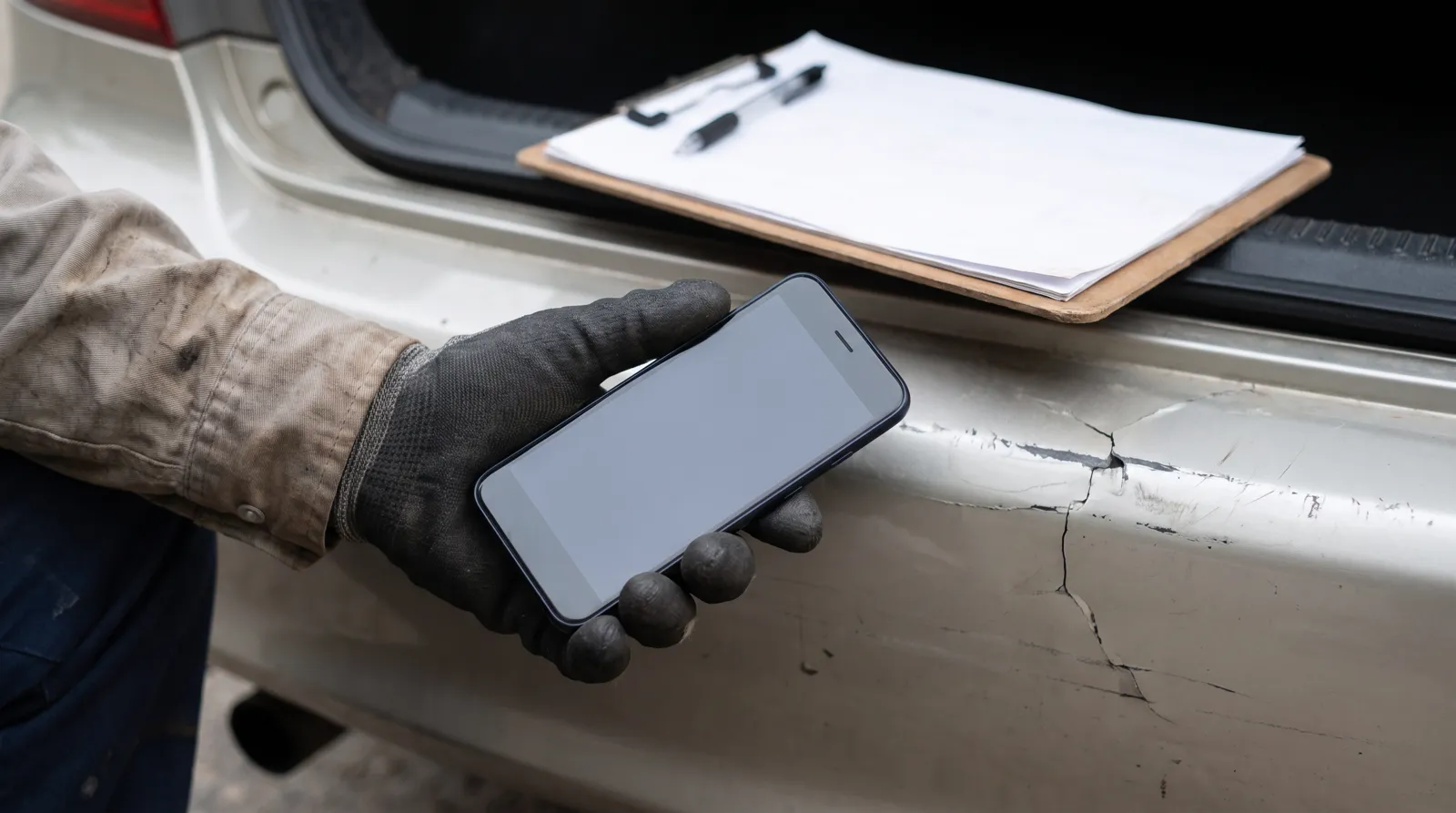
- Condition at drop-off: existing dents, scratches, cracked glass and warning lights. Walk-around photos with timestamps are the easiest proof.
- The concern, in the customer's words.
- Authorized work and amount: the approved estimate total or a diagnostic-only authorization with a dollar limit.
- Promised time: the date and time you told the customer the car would be ready.
- Customer signature and date.
The 3 Cs: concern, cause, correction
Service writers and technicians use the 3 Cs to structure each line of a repair order. Some shops say "complaint" instead of "concern"; it means the same thing.
Concern
What the customer reports, written as specifically as possible: when it happens, how often and under what conditions. "Grinding noise from front when braking, worse in the morning, started a week ago" gives the technician far more to work with than "brakes noisy." For collision work, the concern is the damage: "Rear bumper pushed in, trunk lid won't latch."
Cause
What the technician found to be the root cause, with the test or inspection that proved it. "Front pads worn to backing plate, rotors scored below minimum thickness" or "Rear bumper reinforcement bent, latch striker misaligned." A clear cause line is what justifies the correction and the parts to the customer, and it is what a warranty administrator looks for.
Correction
What was done to fix it: parts replaced, operations performed, and any verification, such as a road test or calibration. "Replaced front pads and rotors, road tested, no noise." If the correction differs from the original estimate, the change should be backed by a documented approval.
Authorization and added work
The signature on the repair order is the customer's permission to proceed up to the stated amount. When the technician finds more work, stop and get approval before doing it, then record it on the repair order. California spells out what that record must include when approval is given by phone: the date, time, name of the person who authorized it, the phone number called, and the added parts, labor and total additional cost. Written approval can come by email. Even if your state doesn't require that level of detail, it is a good standard to follow.
Parts and labor lines
List each part with part number, quantity, type (OEM, aftermarket, used, rebuilt) and price, and each labor operation with hours and rate. If your shop bills different rates by skill, such as mechanical, body, refinish and frame, keep them on separate lines so the repair order converts cleanly to an itemized invoice. Record sublet work (alignment, glass, calibration) with the vendor's name.
Technician notes
Leave room for the tech to record findings that aren't part of this job: a leaking CV boot, tires near the wear bars, a cracked radiator support. These become the next estimate, and they show the customer you told them. Note fluid levels, torque specs used on wheels and any codes cleared.
Promised time and status
A promised time on the repair order keeps the front counter honest. If parts are delayed or a supplement is pending, update the customer and the repair order at the same time, so anyone who picks up the phone sees the current status.
Estimate, repair order, invoice
These three documents should tell one consistent story. The estimate is the quote, the repair order is the authorized work, and the invoice is the bill. If you build estimates on your phone with Car Repair Estimator Repair+, each vehicle keeps its estimates and invoices together, and an approved estimate converts to an invoice in one tap.
Frequently asked questions
What is a repair order in auto repair?
A repair order, or work order, is the document that authorizes and tracks a job. It records the customer, vehicle, the concern, the work the customer approved, the technician's findings and the parts and labor used, and it becomes the basis for the invoice.
What are the 3 Cs on a repair order?
Concern (or complaint), cause and correction: what the customer reported, what the technician found as the root cause, and what was done to fix it. Writing all three clearly supports warranty claims and explains the bill.
Is a repair order the same as an invoice?
No. The repair order authorizes and documents the work as it happens. The invoice is the final bill. Many shops convert the completed repair order into the invoice so the two always match.
Does the customer need to sign the repair order?
It is strongly recommended everywhere, and some states require documented authorization before work begins. California, for example, requires the customer's authorization before any work is done or charges accrue.
Sources
- California Business and Professions Code 9884.9 (authorization and consent)
- AutoSuccess - 3 Cs for increased shop productivity
Jobs, estimates and invoices in one place
Car Repair Estimator keeps each vehicle's estimates and invoices together, from the first photo to paid.
More in for shops