Headlight restoration cost
Updated 2026-10-01 · By the Car Repair Estimator team
Headlight restoration cost is typically about $50-$155 for both headlights at a detailer or repair shop, with badly fogged lenses running $200 or more, while a DIY kit costs about $10-$25. That is far less than a new headlight, but restoration is not permanent: the haze can return in about a year or two.
How much headlight restoration costs
Headlight restoration removes the yellow, cloudy layer from plastic headlight lenses by sanding and polishing, then seals the lens with a new protective coat. It is a labor job with cheap materials, so the price depends mostly on who does it and how bad the haze is. The table shows typical prices from national cost guides.
| Option | Typical cost | Notes |
|---|---|---|
| DIY restoration kit | $10-$25 | Consumer Reports' range; Kelley Blue Book says roughly $25 |
| Add-on during a car detail | $50-$125+ | HomeGuide's detailing price list |
| Professional restoration, both headlights | $59-$155 | Typical range from 156 quotes on Yelp; Yelp's average is $100-$150 per pair |
| Professional detailer, Kelley Blue Book estimate | About $150 | Kelley Blue Book's figure for a professional detailer |
| Severely fogged lenses | $200+ per pair | More sanding steps and labor |
| New headlight assembly, for comparison | Several hundred dollars to $1,000+ per side | Kelley Blue Book: luxury assemblies typically $1,000 or more each |
Prices vary by region and shop. Detailers, body shops and general repair shops offer the service, and some dealer service departments and chain shops do too. Their prices are set locally, so get a written quote and ask what it includes.
What drives the price
- How cloudy the lenses are. Yelp notes that the cloudier the headlights, the more work they take. Light haze may only need polishing; heavy yellowing needs several grades of wet sanding before polishing.
- Headlight design. Yelp notes that lenses with intricate shapes, or ones that need wet sanding or buffing by hand, take more labor.
- Supplies and sealing. Shops that use better compounds and a durable UV-blocking clear coat usually charge more, and that coat is the main thing that makes the job last.
- Mobile or shop. A mobile detailer who comes to you may add a travel charge. Many detailers also offer it as an add-on to a full detail; see car detailing prices.
Why headlight lenses turn yellow
Most modern headlight lenses are polycarbonate plastic covered by a factory protective coating. AAA attributes the yellowing to sunlight damage to those protective plastic coatings, and Consumer Reports says the deterioration is worst where cars get a lot of sun. Road debris and harsh chemicals add pitting and fine scratches. Kelley Blue Book notes that once pitting breaks through the protective clear coat, the lens is open to faster UV damage.
Restoration kits and shops work the same way: they sand off the damaged, oxidized outer layer, polish the plastic clear, and then apply a new protective layer. Edmunds notes that a UV-blocking clear coat after cleaning is what keeps the lens from fogging again quickly.
Cloudy headlights and visibility
Hazy lenses are more than a cosmetic problem. AAA had an accredited lab test headlights from two popular sedans about 11 years old, following federal headlight standard FMVSS 108. The cloudy headlights produced only about 20 percent of the light of new ones, and just 22 percent on low beam. AAA says headlights can begin to show deterioration as early as three to five years, depending on where and how the car is used.
Restoration helps, but it doesn't make the headlight new. In AAA's testing, both professional and DIY restoration brought light output back to about 70 percent. New original-equipment headlights restored it to 100 percent and aftermarket replacements to 83-90 percent. AAA calls restoration the most cost-effective option and replacement the one that improves light output the most.
How long restoration lasts
Restoration is not permanent. Consumer Reports found that the haze typically becomes noticeable again after about a year. Yelp says a professional service lasts about 2 years with proper maintenance before it needs a touch-up. How long it lasts depends on the protective coat, the climate and whether the car is parked outdoors. A Vermont detailer quoted by Kelley Blue Book says applying a new layer of protection is imperative; otherwise the lenses will start to cloud from UV damage very quickly.
To make a restoration last, park in the shade or a garage when you can, keep the lenses clean, and reapply a UV protectant if the product calls for it.
DIY kit or professional?
A kit is the cheapest route and works well on lenses with moderate haze. Consumer Reports says kits take some elbow grease and some need an electric drill for buffing, and Edmunds estimates 30 minutes to an hour for the job. Mask the paint around the headlight with tape first, because abrasive compound and sandpaper can scratch it. Pick a kit that includes a UV-blocking sealant, not just a polish.
A professional is worth it if the lenses are heavily yellowed, if you don't want to sand near your paint, or if you want a more durable clear coat. Yelp notes that kits save money but the results typically won't match a professional's, so the decision usually comes down to your time and how bad the lenses are.
Restore or replace?
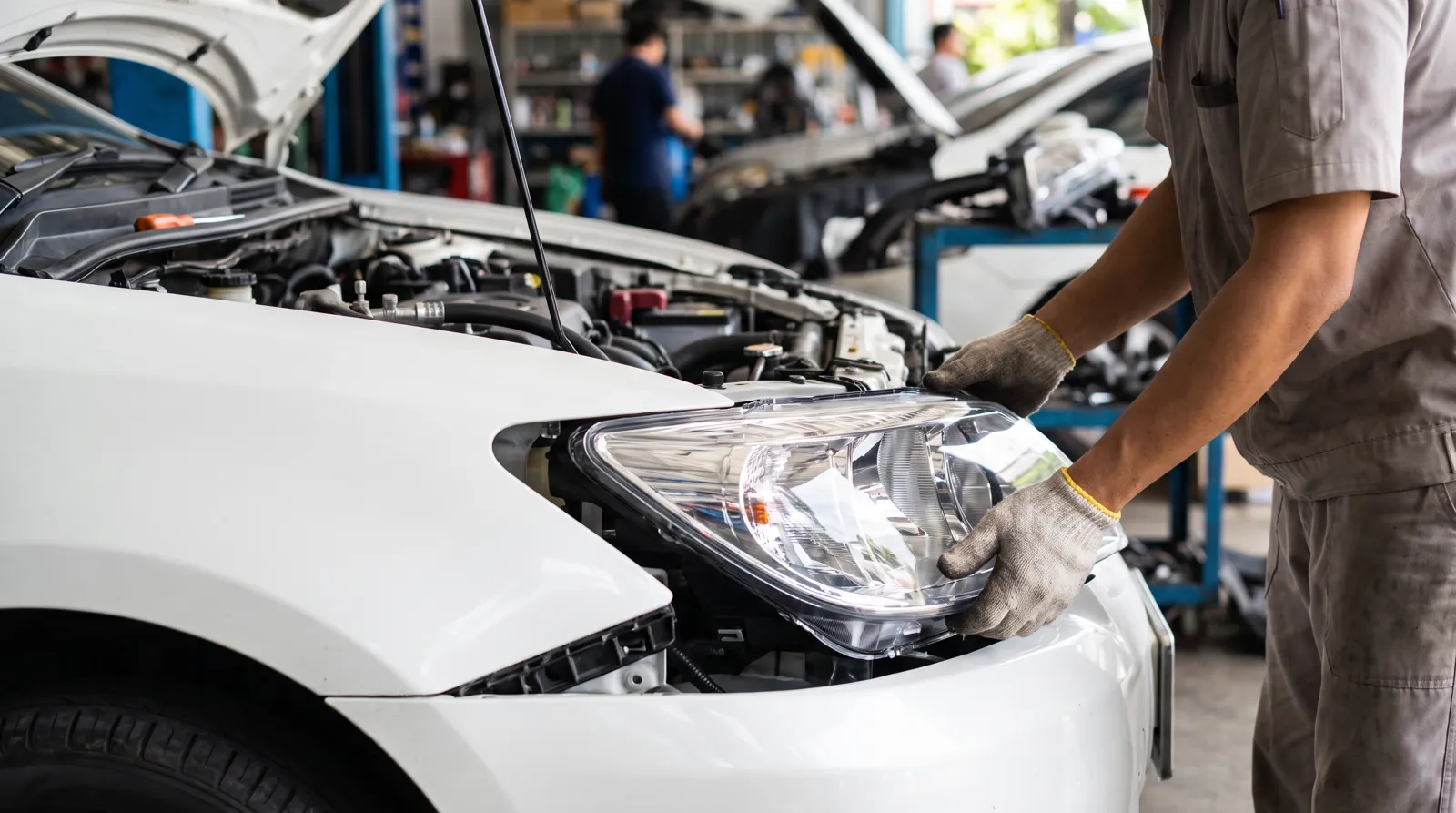
Restoration only fixes the outside surface of the lens. Replace the headlight instead when:
- The lens is cracked or chipped through, or mounting tabs are broken.
- There is fog, condensation or water droplets inside the housing, which points to a broken seal.
- The reflector behind the lens is peeling, burned or discolored.
- The haze keeps coming back within months, even after a proper restoration and sealing.
For bulb, assembly, LED and labor prices, see headlight replacement cost. Kelley Blue Book says assemblies cost several hundred dollars on most mainstream vehicles and $1,000 or more on luxury cars, so restoring an uncracked lens first is usually worth trying.
Inspection
Rules vary by state. Kelley Blue Book notes that in states with safety inspections, headlights that are too dim or cloudy may fail. North Carolina's inspection rules, for example, say headlights are not approved if any lens or reflector is cracked, broken, discolored or missing. If your car is due for inspection and the lenses are yellow, restoring them before the inspection is far cheaper than replacing them after a failed check.
When the headlight was damaged in a crash
A cracked headlight after a front-corner hit usually comes with damage to the bumper cover, mounting brackets or fender, and restoration won't help. Photograph the whole front corner in daylight. With Car Repair Estimator Repair+ you can snap the damage and get an itemized estimate with the headlight assembly, body labor and refinish hours listed separately. Then get quotes from 2-3 shops. The app's estimate is informational, not a binding quote.
Frequently asked questions
How much does headlight restoration cost?
Professional restoration of both headlights typically costs about $50-$155. Yelp puts the average at $100-$150 per pair, with severely fogged lenses at $200 or more, and Kelley Blue Book says a detailer can do it for about $150. As a detailing add-on, HomeGuide lists $50-$125 or more.
Do DIY headlight restoration kits work?
Yes, for hazy lenses that aren't cracked. Consumer Reports says kits cost $10-$25 and work by sanding off the damaged coating and applying a new protective layer. Expect some elbow grease; some kits need an electric drill for buffing.
How long does headlight restoration last?
It varies with the products used and how much sun the car gets. Consumer Reports found the haze typically becomes noticeable again after about a year. Yelp says a professional service lasts about 2 years with proper maintenance. A UV-blocking coat after polishing helps it last longer.
Should I restore or replace cloudy headlights?
Restore if the haze is on the outside of an uncracked lens. Replace if the lens is cracked, there is moisture or fog inside, or the reflector is damaged. In AAA testing, restoration brought light output back to about 70 percent of a new headlight, while new original-equipment headlights restored it to 100 percent.
Sources
- Consumer Reports - Do car headlight restoration kits really work (2026)
- AAA - Dangers of driving with cloudy headlights (2018)
- Yelp - How much does headlight restoration cost (2026)
- HomeGuide - How much does car detailing cost
- Kelley Blue Book - Headlights burned out: what's the cost to replace (2025)
- Edmunds - How to clear foggy headlights
- North Carolina Administrative Code 19A NCAC 03D .0533 - Lights (inspection)
Get an estimate for your car
Snap the damage and get an itemized estimate with parts and labor in minutes.
More in repair costs