OEM vs aftermarket parts
Updated 2026-10-18 · By the Car Repair Estimator team
OEM vs aftermarket parts comes down to who made the part. OEM parts are made by or for the vehicle's manufacturer, and aftermarket parts are made by another company. Aftermarket parts are usually cheaper and quality varies. Insurers often pay for them, and using them does not by itself void a car's warranty. Rules on disclosing them on estimates vary by state. Here is what shops and car owners should know.
What the terms mean
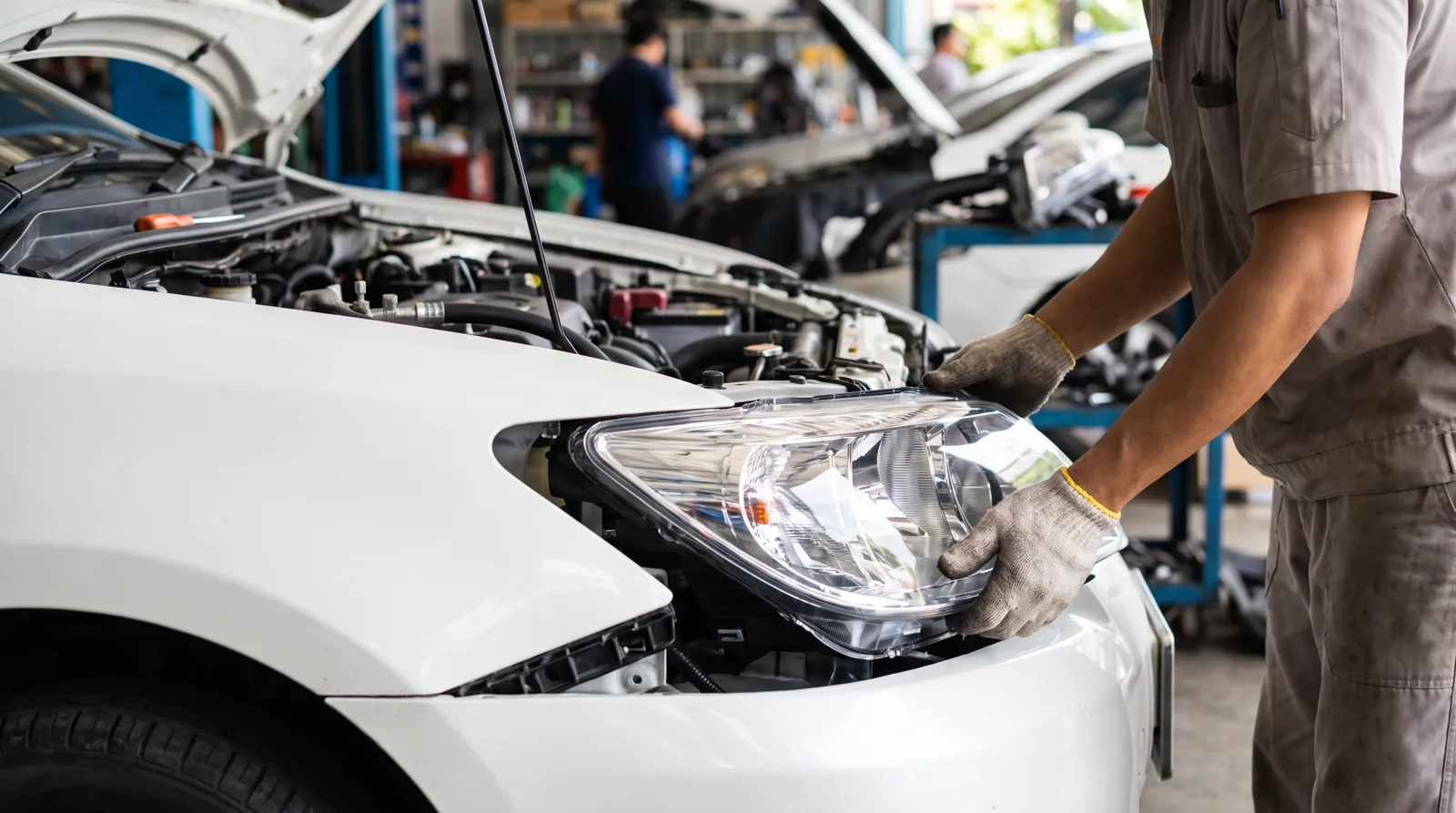
- OEM (original equipment manufacturer). A new part made by or for the company that built the car, the same kind of part installed at the factory.
- Aftermarket. The FTC defines an aftermarket part as one "made by a company that didn't make your vehicle." Quality ranges from close copies to budget parts.
- Recycled or used. A part that was made for and installed in a new vehicle, then removed and resold. It is usually an OEM part, just not a new one.
- Rebuilt, remanufactured or reconditioned. Used parts restored for reuse, common for mechanical items.
Watch the marketing labels. California's Bureau of Automotive Repair says terms such as "Opt-OEM", "Alt-OEM", "OEM-Surplus" and "Like Kind Quality" do not meet the requirement to identify a new OEM crash part on an estimate.
| New OEM | Aftermarket | Recycled (used OEM) | |
|---|---|---|---|
| Made by | Vehicle maker or its supplier | Another company | Vehicle maker, previously installed |
| Typical price | Highest | Usually lower | Usually lower |
| Fit and quality | Matches the original | Varies; certified parts are tested | Original design, condition varies |
| Common use | Owners who want factory parts | Insurer-priced repairs, budget jobs | Older cars, hard-to-find parts |
Quality and CAPA certification
Experian notes that OEM parts may or may not be better than aftermarket or recycled parts. Aftermarket quality varies, and some aftermarket parts are even better than OEM. The tricky part is telling them apart. The best-known independent check for crash parts is the Certified Automotive Parts Association (CAPA). Under its process, a manufacturer's factory must first pass an inspection. Sample parts are then checked for material properties, fit, finish and paint adhesion, and only parts that pass may carry the CAPA Quality Seal. Certified factories and parts face random inspections afterward, and parts that stop complying can lose certification. CAPA says a part without the seal shouldn't be considered certified.
Safety-related parts deserve the most care. In 2010 Consumer Reports raised concerns about imitation bumper parts and told drivers to demand original equipment if knockoffs were used. The Auto Body Parts Association disputed the findings. Its concern was the hidden parts: internal bumper pieces work together to transmit crash forces to the air-bag sensors, so they are not just cosmetic.
What insurance pays for
Many auto policies promise to pay what it takes to repair or replace damaged property with parts of "like kind and quality". That wording, quoted in a Texas Department of Insurance bulletin, often lets the insurer price the repair with aftermarket or used parts. Experian says insurers often prefer aftermarket parts because they lower claim costs, and that unless your policy says otherwise, it's unlikely the insurer will pay for OEM parts.
OEM endorsements. Some insurers sell an add-on that commits them to OEM parts. Toyota Auto Insurance's endorsement, as reported by Repairer Driven News, costs an added premium, pays for new parts made by or for the original manufacturer when available, applies only while the car is no more than ten model years old and doesn't apply to total losses. Terms differ by insurer.
State rules. They vary widely. Two examples:
- California. Under 10 CCR 2695.8(g), an insurer can't require non-OEM crash parts unless they are at least equal to OEM parts in kind, quality, safety, fit and performance. The insurer must pay for any modifications needed to make them fit, warrant that they are equal to OEM and disclose that warranty in writing on its estimate. The parts must also carry permanent identification of their manufacturer. The Department of Insurance's Auto Body Repair Consumer Bill of Rights says consumers may choose their body shop and are entitled to an estimate and invoice that identify all parts as new, used, aftermarket, reconditioned or rebuilt.
- Texas. Texas Insurance Code 1952.301, as explained in TDI Bulletin B-0031-10, bars insurers from limiting coverage by specifying the brand, type, kind, age, vendor, supplier or condition of parts. Insurers must give claimants written notice that they can choose where the vehicle is repaired and which parts are used.
If a claim estimate lists aftermarket parts and you want OEM, ask the insurer what your policy and state rules allow before the repair starts, and whether you would have to pay any price difference.
Aftermarket parts and the car's warranty
This is where owners worry most, and the federal rule is clear. The FTC says your warranty stays in effect if you use aftermarket or recycled parts. The manufacturer or dealer can deny coverage for a damaged part and charge for the repair only if it proves the aftermarket or recycled part caused the damage. The exception is when the warranty provides parts or repairs free of charge. Then the manufacturer can require the parts or repair facilities it chooses. In 2018 FTC staff sent warning letters to six companies, including automakers, saying that statements tying warranty coverage to specified parts or service generally violate the Magnuson-Moss Warranty Act, unless the warrantor provides them free or gets an FTC waiver.
The aftermarket part has its own warranty from whoever made or sold it, separate from the car's warranty. Keep the invoice that shows what was installed.
For shops: putting part types on the estimate
Disclosure rules differ by state, but clear part labeling protects you everywhere. California's Business and Professions Code 9884.9 requires body and collision estimates to identify each part as new, used, rebuilt or reconditioned and each crash part as OEM or non-OEM aftermarket. BAR applies the same labeling to invoices. In New York, estimates and invoices must show which parts are used or not of original quality.
- Put the part type, and the brand for aftermarket parts, on each line.
- Explain price and fit differences before the customer signs, especially for sensor-related and structural parts.
- If the customer or insurer picks the part type, write that down.
- Carry the part types through to the invoice. They matter later for warranty questions and diminished value claims.
Part choice is one of the biggest swings in a repair total, so show the options. You can do it in the estimate itself, as covered in how to write an auto repair estimate, and make clear whether the number is a firm price or an approximation (see estimate vs quote). Car Repair Estimator Repair+ builds an itemized draft from photos of the damage with parts and labor on separate lines, which you can edit to show OEM or aftermarket choices before sending. For typical totals, see collision repair cost and bumper repair cost.
This page is general information as of October 2026, not legal or insurance advice. Rules on parts, estimates and claims vary by state and policy, so check your state's current rules and your policy wording.
Frequently asked questions
Do aftermarket parts void my car warranty?
Not on their own. The FTC says your warranty stays in effect if you use aftermarket or recycled parts. The manufacturer or dealer can deny coverage for damage only if it proves the aftermarket part caused it. The exception is when the warranty provides parts free of charge. Then the manufacturer can require the parts it chooses.
Will insurance pay for OEM parts?
Not always. Many policies pay for parts of like kind and quality, which can mean aftermarket or used parts. Some insurers sell an OEM endorsement for an extra premium. One example limits it to cars no more than ten model years old. Check your policy and your state's rules.
Are aftermarket parts as good as OEM?
Quality varies. Some aftermarket parts match OEM and some don't. CAPA certification means a part's factory passed an inspection and samples were tested for material, fit, finish and paint adhesion. Consumer Reports raised concerns about some imitation bumper parts in 2010, and the aftermarket industry disputed those tests.
Does a repair estimate have to list aftermarket parts?
In some states, yes. California requires body and collision estimates and invoices to identify each crash part as OEM or non-OEM aftermarket. New York requires estimates and invoices to show parts that are used or not of original quality. Rules vary by state.
Sources
- FTC - Auto warranties and auto service contracts
- FTC - Press release: FTC staff warns companies it is illegal to condition warranty coverage on use of specified parts or services (2018)
- California Business and Professions Code 9884.9 (estimates must identify OEM or aftermarket crash parts)
- California Bureau of Automotive Repair - Write It Right guide (updated 2026)
- California Code of Regulations, 10 CCR 2695.8 (non-OEM crash parts), via Cornell LII
- California Department of Insurance - Auto Body Repair Consumer Bill of Rights
- Texas Department of Insurance - Commissioner's Bulletin B-0031-10 (2010)
- New York DMV - Know your rights in auto repair
- CAPA - The certification process
- Experian - Does car insurance cover replacement parts? (2022)
- Repairer Driven News - Toyota launches auto insurance with OEM parts endorsement (2021)
- FenderBender - Consumer Reports: consumers should demand OEM parts (2010)
Estimates and invoices in minutes
Car Repair Estimator turns a photo into an itemized estimate, then an invoice. Free to download.
More in for shops