Estimate vs quote
Updated 2026-10-18 · By the Car Repair Estimator team
In the estimate vs quote question, the short answer is that an estimate is your best approximation of the price, while a quote is usually a fixed price you commit to once the customer accepts it. For auto repair shops the label matters less than what state law says about written estimates, customer authorization and charging more than the estimate. Those rules vary by state. This is general information, not legal advice.

The basic difference
In general business use, an estimate is an approximation and a quote is a commitment. FreshBooks puts it this way: an estimate is an "educated guess" at what a job will cost and is not binding, while a quote gives a fixed price for a set period, and once the customer accepts it you are expected to do the work at that price. A quote only works when the scope is fully known. An estimate is for jobs that still have unknowns.
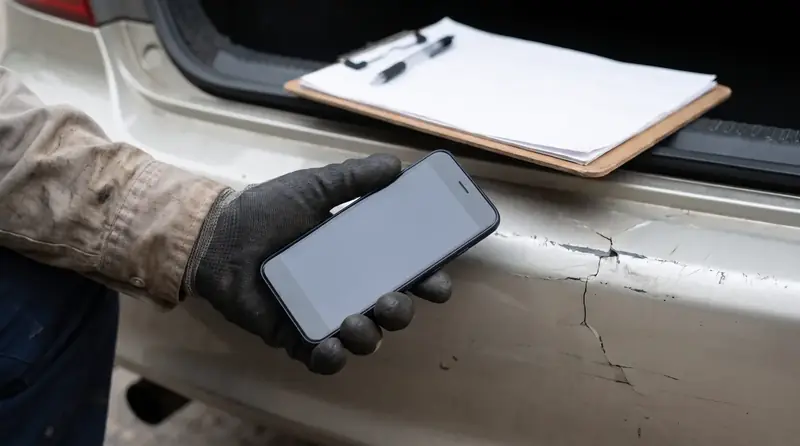
Auto repair is mostly a world of unknowns. You can see a crushed bumper cover, but not always the cracked absorber, bent reinforcement bar or damaged sensor bracket behind it. That is why most repair paperwork, and most state repair laws, talk about estimates rather than quotes.
| Estimate | Quote | |
|---|---|---|
| What it means | Best approximation of parts and labor | Fixed price for a defined job |
| Can the price change? | Yes, typically with customer approval first | Not for the quoted scope while it is valid |
| Best for | Collision damage, diagnosis, anything needing teardown | Routine services, flat-rate jobs, posted prices |
| Hidden damage | Handled with a revised estimate or supplement | Needs a new quote or written change order |
| Main risk for the shop | Customer disputes the final bill | Shop absorbs any cost overrun |
What you call the document doesn't settle the question by itself. The terms written on it and your state's repair law matter more. A document labeled "estimate" that promises "total price, no changes" can read like a firm price to a customer.
What state laws say about written estimates
There is no single national rule for repair estimates. The FTC's consumer advice tells drivers to ask for a written estimate and notes that state law may require the shop to get approval before doing extra work. A few examples show how much the details vary.
California
Business and Professions Code 9884.9 requires a repair dealer to give the customer a written estimated price for parts and labor for a specific job. No work can be done and no charges can accrue before the customer authorizes it. The shop can't charge more than the estimate without the customer's consent, obtained after it learns the estimate isn't enough and before the extra work is done. Consent can be oral, but the shop must record the date, time, name of the person who approved it, and the added parts, labor and new total. For body and collision work the estimate has to be itemized, list labor and parts separately, and identify each part as new, used, rebuilt or reconditioned, and each crash part as OEM or non-OEM aftermarket.
The Bureau of Automotive Repair's Write It Right guide adds the teardown rule. Before taking part of a vehicle apart to diagnose it, the shop needs a teardown estimate that covers teardown and reassembly costs, parts normally destroyed in teardown and the maximum reassembly time. After teardown comes a second, itemized estimate, and the customer has to authorize it before any repair.
Florida
Florida Statutes 559.905 applies when a repair will cost the customer more than $150. The shop must give the customer a disclosure form where they choose to get a written estimate, set a dollar limit the shop can't go over without approval, or decline an estimate. A written estimate must include items such as whether the job is billed flat-rate, hourly or both, the estimated cost, any charge for the estimate itself and the daily storage charge. Under 559.909, the shop must notify the customer if charges will exceed the written estimate by more than $10 or 10%, whichever is greater, up to $50. It can't charge more than that without the customer's authorization.
New York
The New York DMV says a shop must give a written estimate of parts and labor if the customer requests one, may not charge more than the estimated price without permission, and may not do any work without the customer's permission. If approval comes by phone, the invoice must show the date, time and name of the person who gave it.
Other states have their own thresholds, waiver forms and consent rules, and some have none. Check your state's repair law, or ask your state attorney general's office or repair bureau, before you set your policy.
Why most shops write estimates, not quotes
- Hidden damage. Teardown often turns up broken clips, brackets and structural damage that no walk-around could show. A fixed quote leaves that cost with the shop. An estimate plus a properly approved supplement doesn't.
- Parts prices and availability. A backordered OEM part or a price change between estimate and order can change the total.
- Insurance work. On claims, the insurer's appraisal and your estimate often have to be reconciled, which is easier when everyone treats the first number as an estimate.
When a fixed quote makes sense
Fixed prices work well for repeatable jobs with a clear scope: a standard maintenance service, a known paintless dent repair, a single headlight swap on a vehicle you've done many times. California's law even exempts listed preventive maintenance services from the written estimate requirement when the price is conspicuously posted or acknowledged by the customer and the customer authorizes the work. If you quote a fixed price, put the exact scope, exclusions and an expiry date on it, and say in plain words that it is a fixed price.
How to word your estimates
- Label it clearly as an estimate and say it covers visible damage or the stated concern.
- Give a validity period so an old price can't be held against you months later.
- Itemize. Parts, labor operations, refinish, materials, sublet, fees and tax on separate lines. Our guide on how to write an auto repair estimate walks through each one, and the labor time guide covers the hours.
- Identify part types as new OEM, aftermarket, used or rebuilt. Some states require it. See OEM vs aftermarket parts.
- State how extra work is approved, and record every approval with date, time, name and amount.
- List teardown, diagnostic and storage charges that apply if the customer declines the repair.
- Get a signature or documented electronic approval before you start.
Speed helps here too. The faster a customer gets a clear, itemized estimate, the sooner you get a yes. Car Repair Estimator Repair+ turns photos of the damage into an itemized first draft with parts, body labor and refinish hours on separate lines that you can review and send as a link or PDF. Its numbers are estimates, not binding quotes, so your shop's terms and your state's rules still apply. For the tools side, see our roundup of auto repair estimate software and the free estimate template.
This page summarizes a few state rules as of October 2026 for general information only. It is not legal advice. Laws change, so check the current rules in your state.
Frequently asked questions
Is an estimate legally binding?
An estimate is generally treated as an approximation, not a fixed price. Several states still limit how far a repair shop can go over it. California bars charges above the estimate without the customer's consent, and Florida requires customer authorization before the bill goes more than $10 or 10% (whichever is greater, up to $50) over a written estimate. Check your own state's rules.
What is the difference between a quote and an estimate?
A quote is usually a fixed price for a defined job that holds once the customer accepts it within its validity period. An estimate is an educated guess that can change, typically with the customer's approval before the extra work is done.
Do auto repair shops have to give written estimates?
It depends on the state. California requires a written estimated price for parts and labor and the customer's authorization before work starts. Florida requires a written estimate, unless the customer waives it in writing, when a repair will cost more than $150. In New York the shop must give a written estimate if the customer asks for one.
Can a shop charge more than the estimate?
Usually only with the customer's consent, and the rules for getting and recording that consent differ by state. In California, consent can be oral, but the shop must record the date, time, name of the person who approved it and the added cost.
Sources
- California Business and Professions Code 9884.9 (written estimates and consent)
- California Bureau of Automotive Repair - Write It Right guide for repair dealers (updated 2026)
- Florida Statutes 559.905 - Written repair estimates (2024)
- Florida Statutes 559.909 - Charges exceeding the estimate (2024)
- New York DMV - Know your rights in auto repair
- FTC - Auto repair basics
- FreshBooks - Estimate vs quote vs bid vs proposal (2022)
Estimates and invoices in minutes
Car Repair Estimator turns a photo into an itemized estimate, then an invoice. Free to download.
More in for shops