 Car Repair Estimator
How to write an auto repair estimate
Updated 2026-09-29 · By the Car Repair Estimator team
A good auto repair estimate is specific enough that the customer understands every line and a technician could do the job from it. Here is the step-by-step process shops use, from the walk-around to the signature, with the details that most often get missed.
Step 1: Record the customer and vehicle
Start with the basics every time: customer name, phone and email; vehicle year, make, model, trim and color; the 17-character VIN; plate; and odometer reading. Scan or photograph the VIN rather than copying it by hand. Trim level decides which headlamp, bumper cover or sensor package the car has, and the wrong trim is one of the most common reasons a parts price is off.
Step 2: Listen, then write down the concern
Write the concern in the customer's words before you form your own opinion. For mechanical work, ask when it happens, how often and since when. For collision work, ask how it happened: a low-speed parking lot hit, a pole, a hailstorm. The answer tells you where to look for damage beyond what's visible.
Step 3: Inspect and document
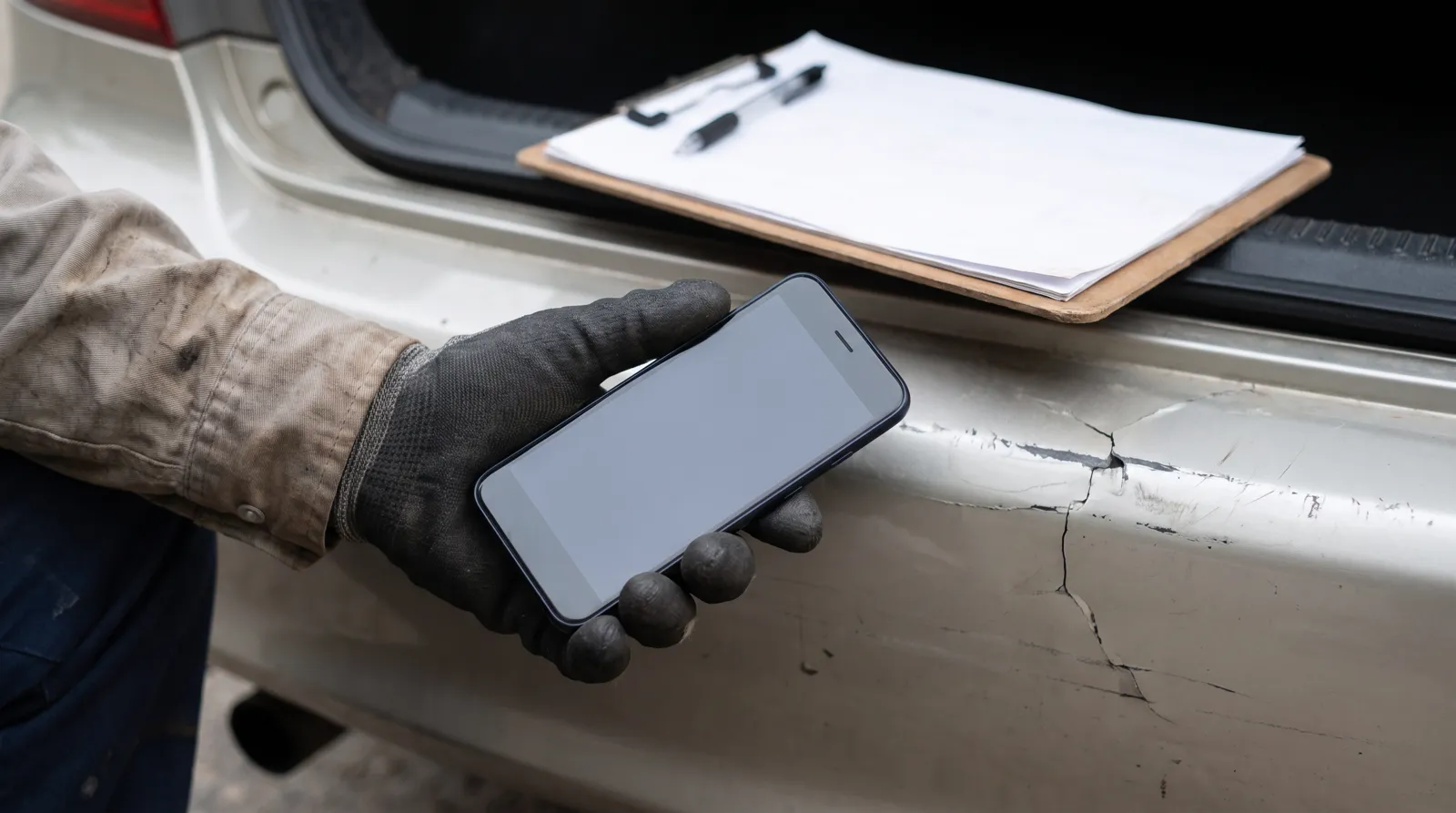
Walk the whole car, not just the damaged corner. Photograph the damage from a distance and close up, then photograph existing damage elsewhere so it isn't blamed on you later. For collision work, check panel gaps, which can reveal broken brackets and clips; look behind grilles and wheel liners with a light; and note sensors, cameras and lamps in the impact zone.
Step 4: Decide repair or replace for each part
Go panel by panel and part by part. For each, decide whether it will be repaired or replaced, and be ready to explain why. Typical logic:
- A shallow dent in a door with intact paint may be a candidate for paintless dent repair.
- A dented, scratched fender is often repaired and refinished; a torn or kinked one is usually replaced.
- A scuffed bumper cover is repaired; one with broken mounting tabs or a torn sensor mount often isn't worth it.
When repair labor plus refinish approaches the cost of a new part plus installation and refinish, replacement usually wins.
Step 5: List and price the parts
List each part with quantity, part number if you have it, and price. State the part type: new OEM, aftermarket, used or rebuilt. Don't forget the small stuff that makes the job complete: clips, fasteners, emblems, one-time-use bolts, moldings and gaskets. Missing small parts are a classic source of supplements and unhappy customers.
Step 6: List the labor, by type
Write each labor operation on its own line with hours and rate: "R&I front bumper cover," "Repair RF fender," "Replace LF headlamp." Keep body, refinish, frame, mechanical and diagnostic labor on separate lines at their own rates. Our labor time guide explains where published times come from. The Database Enhancement Gateway notes that estimating system times assume new, undamaged parts on new, undamaged vehicles, so add time where the real car calls for it: rust, seized fasteners, prior repairs, aftermarket accessories in the way.
Step 7: Add refinish, blend and materials
For any panel that gets paint, add refinish time: prep, primer where needed, base and clear. Then decide which adjacent panels need blending for a color match and add a blend line for each. Metallic, pearl and tri-coat colors are the usual candidates; see repaint costs for how finish type affects price. Finish with a paint and materials line. Calculate it the same way on every job so similar repairs price alike.
Step 8: Add sublet work and fees
List work you send out, such as alignment, glass, ADAS calibration, towing or machine work, as sublet lines with the vendor's name. Add shop supplies, hazardous waste or disposal fees as named lines if you charge them.
Step 9: Tax, total and terms
Show a parts subtotal, a labor subtotal, tax and the total. Then add the terms:
- How long the estimate is valid.
- That it's based on visible damage or the stated concern, and hidden damage will be quoted before repair.
- How additional work will be approved.
- Any teardown, diagnostic or storage charges if the customer declines the repair.
Step 10: Review it with the customer and get a signature
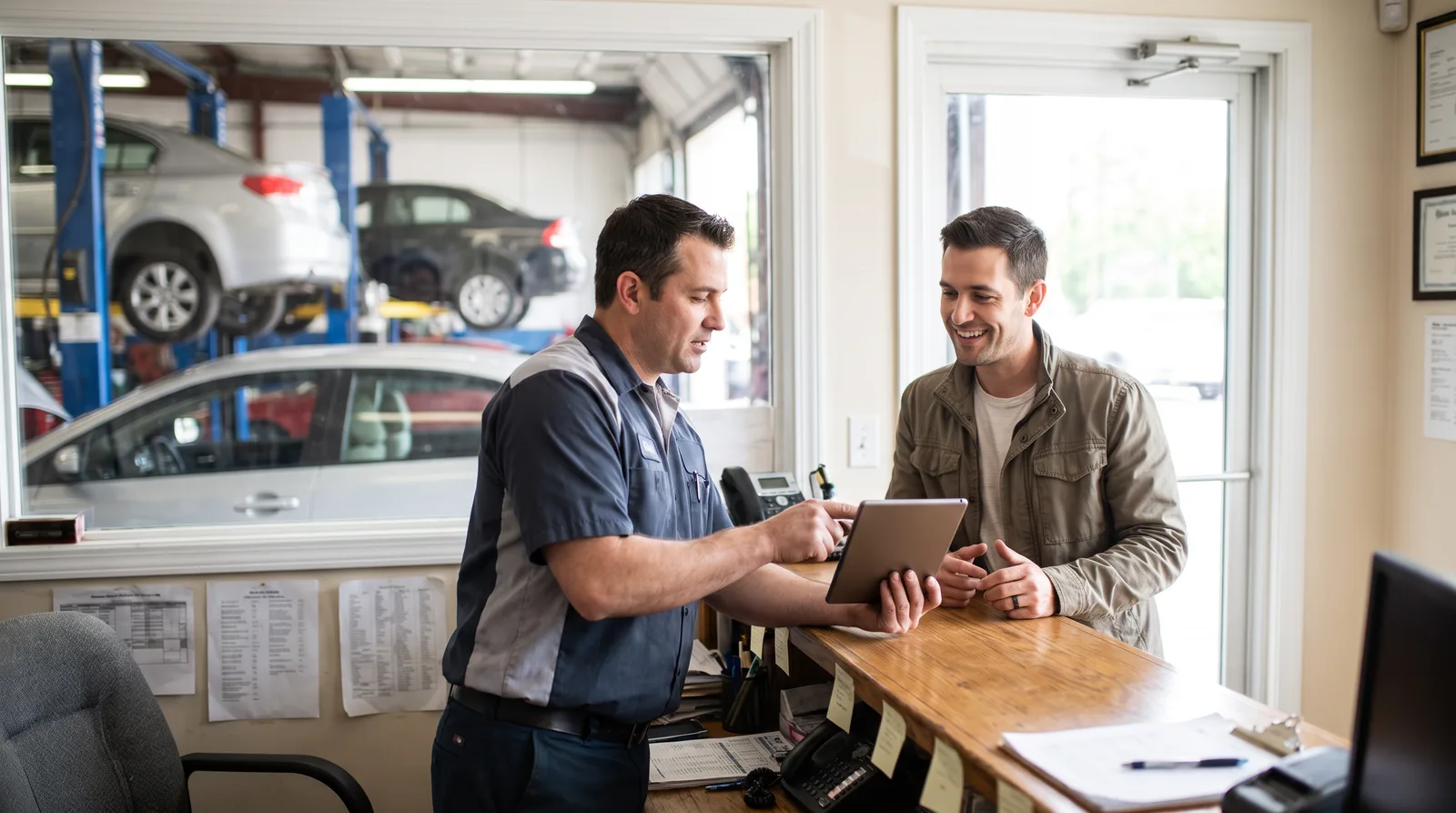
Walk the customer through the estimate, especially repair vs replace calls and the refinish lines, which are the ones they're least likely to understand. Then get a signature or documented electronic approval. Some states make this mandatory. California requires a written estimated price for parts and labor and the customer's authorization before any work is done or charges accrue, and consent before exceeding the estimate (Business and Professions Code 9884.9). Florida requires a written estimate when repairs will cost the customer more than $150 (Florida Statutes 559.905). Check your own state's rules.
Step 11: Handle supplements properly
When teardown reveals more damage, stop. Write a dated supplement listing the additional parts and labor, explain it to the customer (photos help), and get approval before continuing. If approval comes by phone, record who approved it, when and for how much on the repair order.
Step 12: Carry it through to the invoice
The approved estimate becomes the repair order and then the invoice. If the three documents match, payment is simple.
Common mistakes
- One lump "labor" line instead of operations by type.
- Forgetting blend on adjacent panels.
- No paint materials line, so materials come out of your margin.
- Missing clips, fasteners and one-time-use parts.
- No validity date, so a months-old price gets held against you.
- Extra work done before approval.
Doing it faster
Steps 1 through 9 are where the time goes. You can use our free estimate template, or build the first draft from your phone with Car Repair Estimator Repair+: photograph the damage, add a note or dictate, scan the VIN, and get an itemized estimate with repair vs replace per panel, priced parts, body and refinish labor on separate lines, blend and paint materials at your own rates, ready to send as a branded link or PDF. Its estimates are informational, not insurance appraisals, so steps 10 and 11 are still yours.
Frequently asked questions
How do you write a car repair estimate?
Record the customer and vehicle with VIN and mileage, inspect and photograph the damage or concern, decide repair or replace for each part, list parts with prices, list labor operations with hours and rates, add paint materials, sublet and fees, add tax, set a validity period and get the customer's signature.
How accurate should an estimate be?
As accurate as what you can see. Note that it covers visible damage or the stated concern, and write a supplement for anything found after teardown, with the customer's approval before doing the extra work.
Do I need a customer signature on an estimate?
It is good practice everywhere and a legal requirement in some states. California requires the customer's authorization before any work is done or charges accrue, and consent before exceeding the estimate.
Should I charge for estimates?
Many shops give free visual estimates but charge for diagnosis or teardown. If you charge, say so before you start and put the charge in writing.
Sources
- Database Enhancement Gateway - Know your estimating system
- California Business and Professions Code 9884.9 (written estimates and consent)
- Florida Statutes 559.905 (written repair estimates, 2024)
Estimates and invoices in minutes
Car Repair Estimator turns a photo into an itemized estimate, then an invoice. Free to download.
More in for shops