 Car Repair Estimator
How to start a mobile mechanic business
Updated 2026-09-29 · By the Car Repair Estimator team
A mobile mechanic business can start with a van, a good set of tools and a phone, but the paperwork decides whether it lasts. This guide walks through the practical steps: choosing services, registration and licensing, insurance, tools, pricing, estimates and invoicing, and getting the first customers. Requirements vary by state and city, so treat the legal steps as a checklist to confirm locally.
1. Decide what you'll do, and what you won't
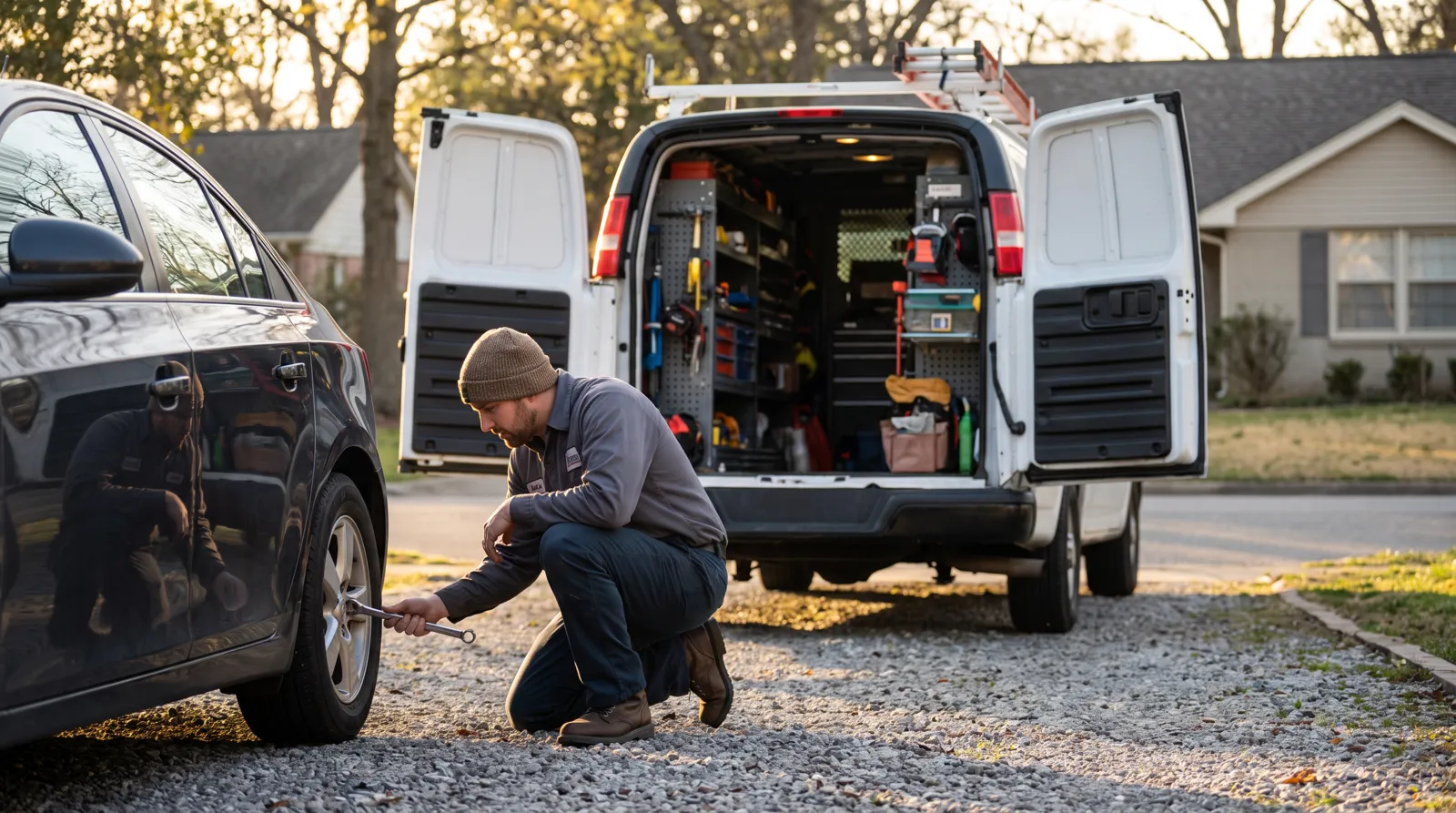
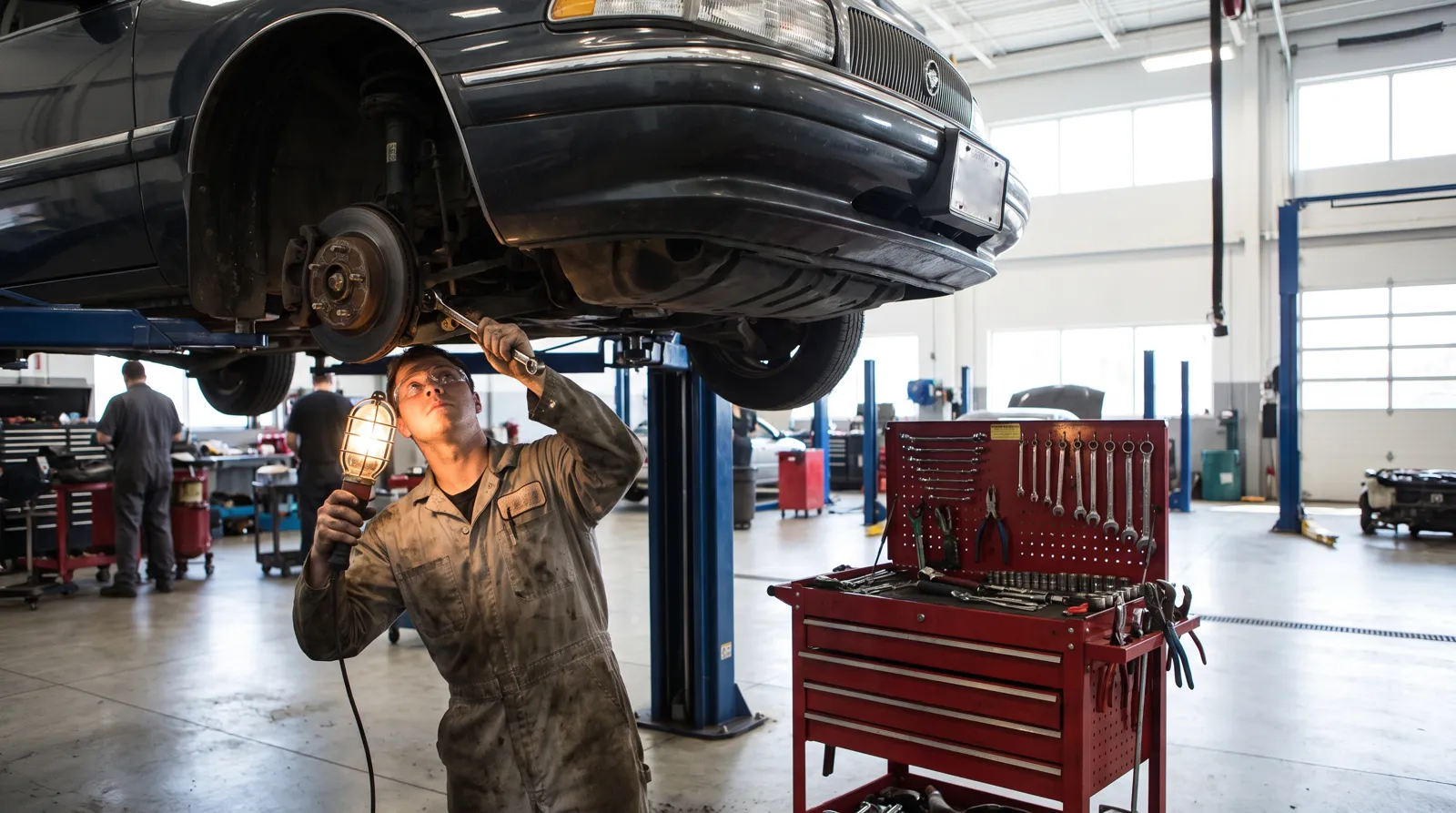
A mobile operation can't do everything a shop can. No lift, limited space, weather and customer driveways all shape the menu. Common mobile services include brakes, batteries, starters and alternators, belts, sensors, diagnostics, fluid services, suspension parts that don't need a lift, and pre-purchase inspections. Some mobile techs specialize in body work that travels well, like dent removal, scratch and bumper repair.
Write down what you won't do, too: jobs that need a lift, an alignment rack or a paint booth. Having a partner shop you can refer or sublet those jobs to keeps customers coming back to you.
2. Set up the business
- Choose a structure, such as sole proprietorship or LLC, and register the business name with your state if required.
- Get an EIN from the IRS if your business structure or hiring plans require one; many owners get one anyway to keep their Social Security number off paperwork.
- Open a separate business bank account. Mixing personal and business money makes taxes and bookkeeping much harder.
- Register for sales tax if your state taxes parts or labor.
3. Licenses and registrations: they vary by state
There's no single national license for mechanics. The SBA's guidance is that the licenses and permits you need from your state, county or city depend on your business activities and location, and that industry requirements often vary by state. For a mobile mechanic, check:
- Your city or county for a general business license and any home-occupation permit if you run the business from home.
- Your state's automotive repair regulator, if it has one. Florida's Department of Agriculture and Consumer Services, for example, says anyone who is paid to repair motor vehicles owned by others must register with it. California requires automotive repair dealer registration with the Bureau of Automotive Repair, and its rules effective October 1, 2025 require mobile dealers to give a physical address where records are kept and to record on each final invoice where the repair was performed. An existing California dealer doing mobile work more than 50 miles from its registered location needs a separate registration.
- Environmental rules for storing and disposing of used oil, coolant and other fluids; check with your state environmental agency and local authorities.
- EPA Section 609 certification if you'll touch A/C. The EPA requires anyone who services motor vehicle air conditioning for payment to be certified and to use approved refrigerant handling equipment.
ASE certification is voluntary, but it is a credential customers and fleet managers recognize.
4. Insurance
Insurance is where many new mobile mechanics are underprotected. Talk to a commercial agent who works with auto repair businesses about:
- General liability, which the SBA describes as protection against losses from bodily injury, property damage and related claims.
- Commercial auto for your van or truck. A personal auto policy may not cover business use.
- Coverage for customer vehicles in your care, often called garagekeepers coverage.
- Tools and equipment coverage for what lives in the vehicle.
- Workers' compensation once you hire. The SBA notes that businesses with employees are required to carry certain coverage, and some states require more.
5. Tools and the vehicle
Start with what your service menu needs, not a full shop's worth of tools. A typical core kit: hand tools and sockets, impact tools and batteries, torque wrenches, floor jack and stands, wheel chocks, a scan tool that covers the makes you'll see, a multimeter, a battery tester and jump pack, drain pans and fluid containers, lighting, a creeper or ground mat, and a canopy for sun and rain. Add specialty tools as jobs demand them. Organize the vehicle so you can find anything in under a minute; customers notice.
Plan how you'll get parts. Accounts with local parts stores, with delivery to your job site if they offer it, save driving time.
6. Pricing
Your rate has to cover your costs, not match a shop's sign. Add up monthly costs (van payment, fuel, insurance, tools, phone, software, advertising) and your own pay, then divide by the hours you'll actually bill. Drive time is real time, and you won't bill it all. The labor rate calculator does the math. For context, the Bureau of Labor Statistics puts 2025 median pay for automotive service technicians and mechanics at $24.34 an hour; as an owner, your billed rate also has to cover everything a shop owner would pay for.
Decide how you'll handle:
- Book time vs actual time. Book time for common jobs gives customers a firm price; see the labor time guide.
- Service-call or trip fees, and whether they're waived if the customer books the repair.
- Diagnostic charges, stated up front.
- Parts markup and whether customers can supply their own parts. Many mobile mechanics won't warranty customer-supplied parts; if that's your policy, put it in writing.
7. Estimates and invoices from day one
Paperwork protects you. For every job, write an itemized estimate before starting, get the customer's approval, and give an itemized invoice at the end. Get approval before adding work. Our free estimate template, repair order template and invoice template cover the basics.
If you'd rather do it from your phone at the job, Car Repair Estimator Repair+ builds an itemized estimate from a photo, a note or dictation and a VIN scan, at your own hourly rates, sends it as a branded link or PDF, and converts the approved estimate to an invoice in one tap. More on that for mobile mechanics.
8. Finding customers
- Google Business Profile. Set a service area, add photos of real jobs and ask satisfied customers to leave reviews.
- A simple website with your service area, services, how to book and your registration number if your state issues one. California requires registered repair dealers to show the registered business name, registration number and phone number in online advertising.
- Local partnerships: used car dealers, property managers, small fleets, tow operators and shops that don't do the work you do.
- Fast quotes. Many leads start with "how much to...?" Answering quickly with an itemized estimate wins jobs that a vague number loses.
- Follow-up. Keep each customer's vehicle history and remind them about the next service.
9. Keep records
Keep copies of estimates, approvals, invoices and photos for every job. Some states require it; California, for example, requires mobile repair dealers to keep records at a physical address available for inspection, and records are your best defense in a dispute or warranty claim.
Frequently asked questions
Do you need a license to be a mobile mechanic?
It depends on where you work. Most places require a general business license, and some states register auto repair businesses. California, for example, requires automotive repair dealer registration and has specific rules for mobile repair. Check your state and city before you take paid work.
What insurance does a mobile mechanic need?
Talk to a commercial insurance agent about general liability, commercial auto for your work vehicle, and coverage for customer vehicles in your care. The SBA notes that businesses with employees must carry certain coverage such as workers' compensation, and some states require more.
Do mobile mechanics need EPA certification?
If you service vehicle air conditioning for pay, yes. The EPA requires Section 609 certification and approved refrigerant recovery equipment for anyone servicing motor vehicle A/C for payment.
How should a mobile mechanic charge?
Set an hourly rate from your own costs and billable hours, use book time for common jobs, and decide whether to charge a service-call or trip fee. Put every charge on a written estimate before starting.
Sources
- US Small Business Administration - Apply for licenses and permits
- US Small Business Administration - Get business insurance
- California Bureau of Automotive Repair - Mobile repair regulations (Oct 2025)
- Florida Department of Agriculture and Consumer Services - Motor vehicle repair
- US EPA - Regulatory requirements for MVAC system servicing
- US Bureau of Labor Statistics - Automotive service technicians and mechanics
Estimates and invoices in minutes
Car Repair Estimator turns a photo into an itemized estimate, then an invoice. Free to download.
More in for shops